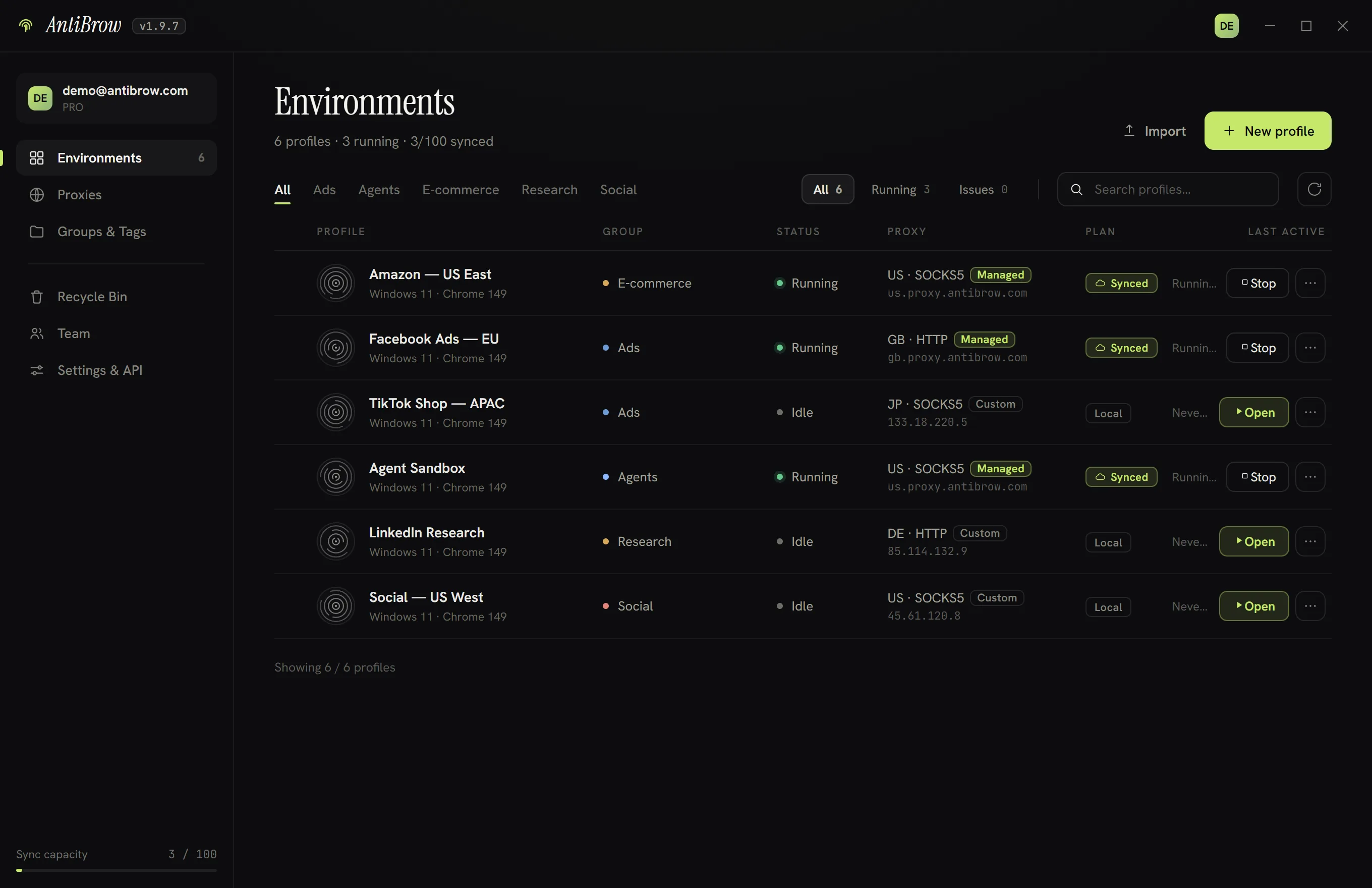
Real-device fingerprints, controlled with the standard Playwright API you already write. Start free with unlimited local profiles — at the lowest price in the market.
The only browser sitting in the gap between the antidetect crowd and the agent-browser crowd — with the lowest price in the category.
Standard Playwright API, no proprietary SDK to learn. Connect your AI agent or automation script in one line and it just runs.
Every profile carries the fingerprint of a real device — not randomized noise that anti-bot systems flag. Consistent across Canvas, WebGL, fonts and the engine layer.
The lowest-priced plans in the category — and managed residential proxies come with every paid plan, so you don't have to wire up a third party.
Create as many profiles as you want on disk at zero cost — most competitors cap you at 2 to 5. Pay only when you need concurrency or cloud sync.
Cookies, sessions and local storage persist across restarts. Warm up an account once and it stays warm.
Every profile carries its own virtual authenticator. When a site enrols a passkey, AntiBrow captures it automatically and replays it on the next sign-in — passwordless logins stay warm per identity, no re-enrolment. On by default for every new profile.
Watch headless sessions as they run, in real time, from your dashboard. No black box — know exactly what your agents and accounts are doing.
Randomized fingerprints betray themselves: a Windows user-agent paired with a font list no matching machine would have, or a GPU string no real card ever shipped. Anti-bot systems are built to catch exactly those contradictions.
We sample each profile whole, from a coherent device profile, and spoof it at the kernel level through the Engine runtime. Canvas, WebGL, audio, fonts and the protocol layer all agree — by construction, not by luck.
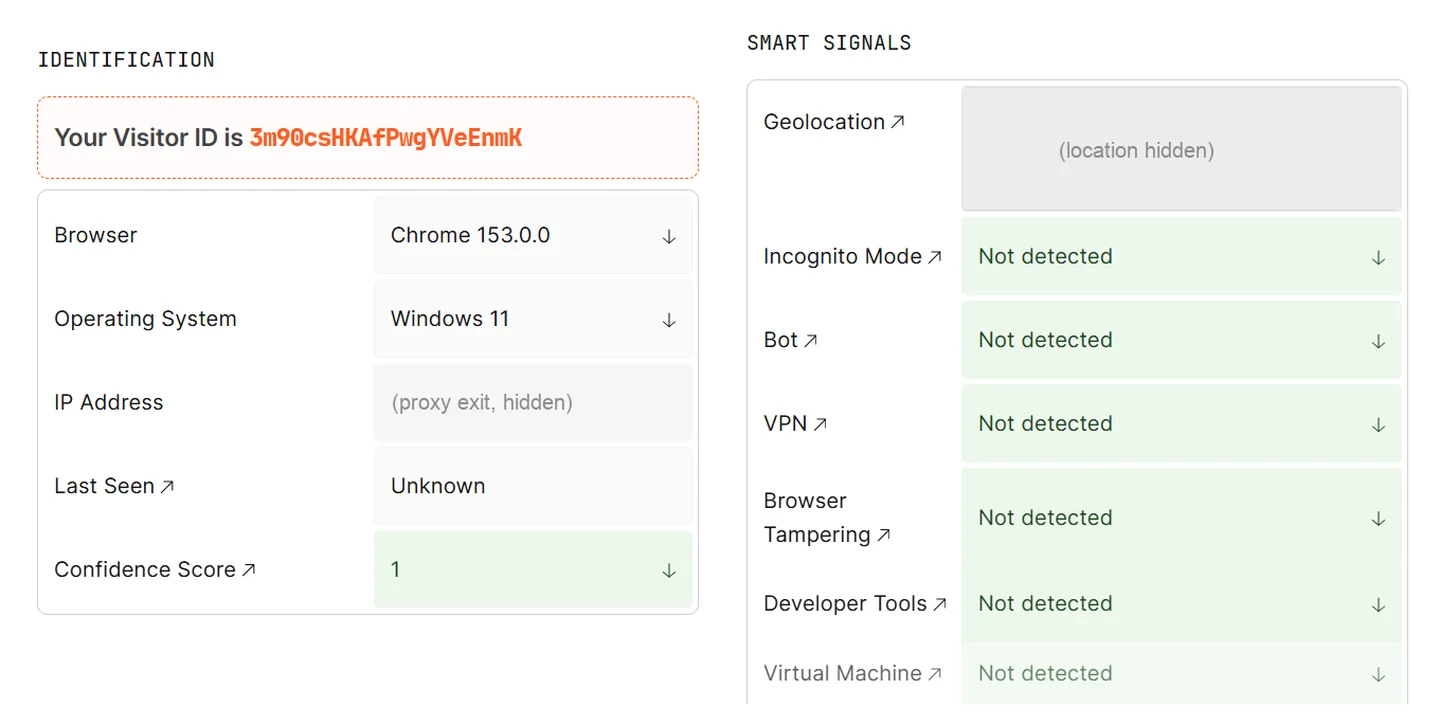
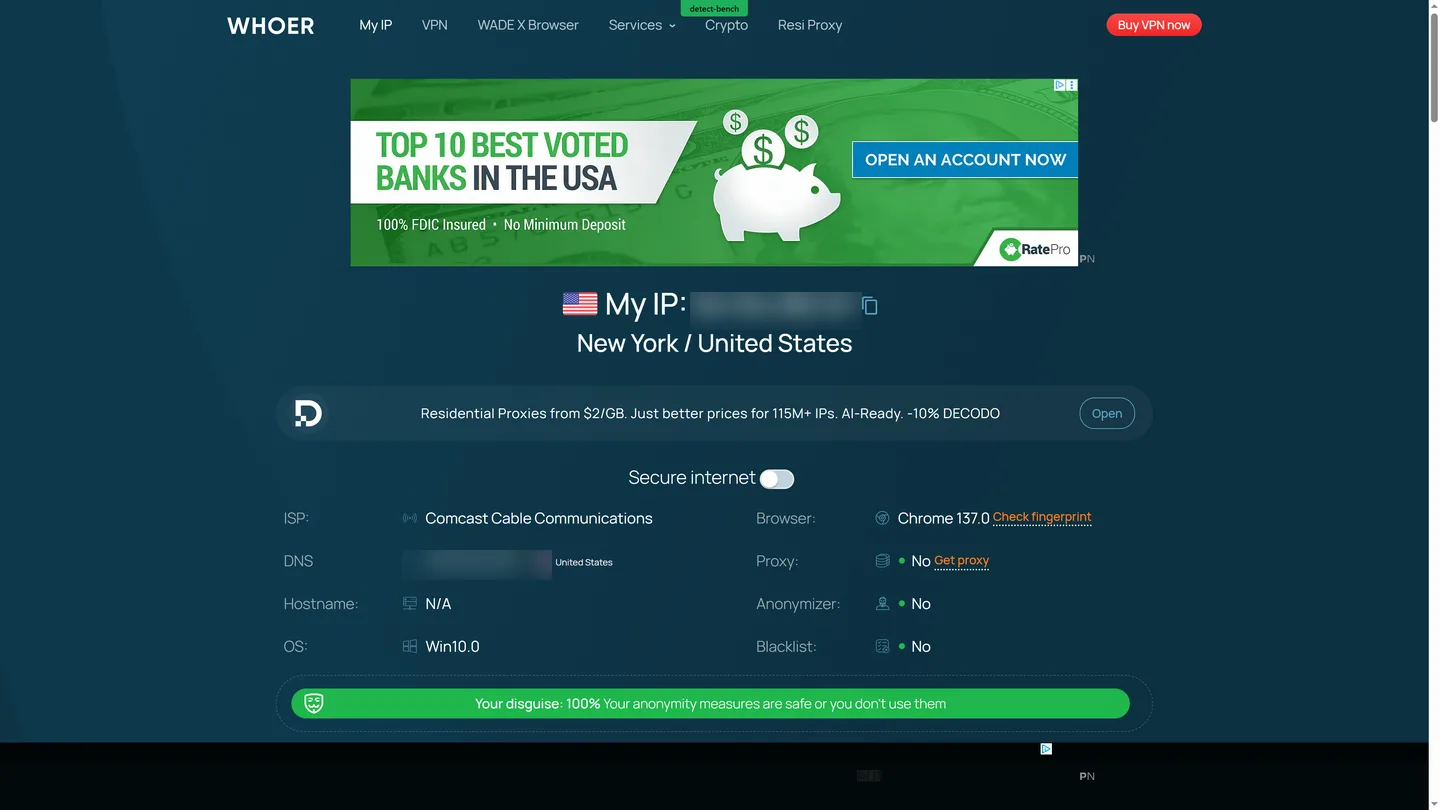
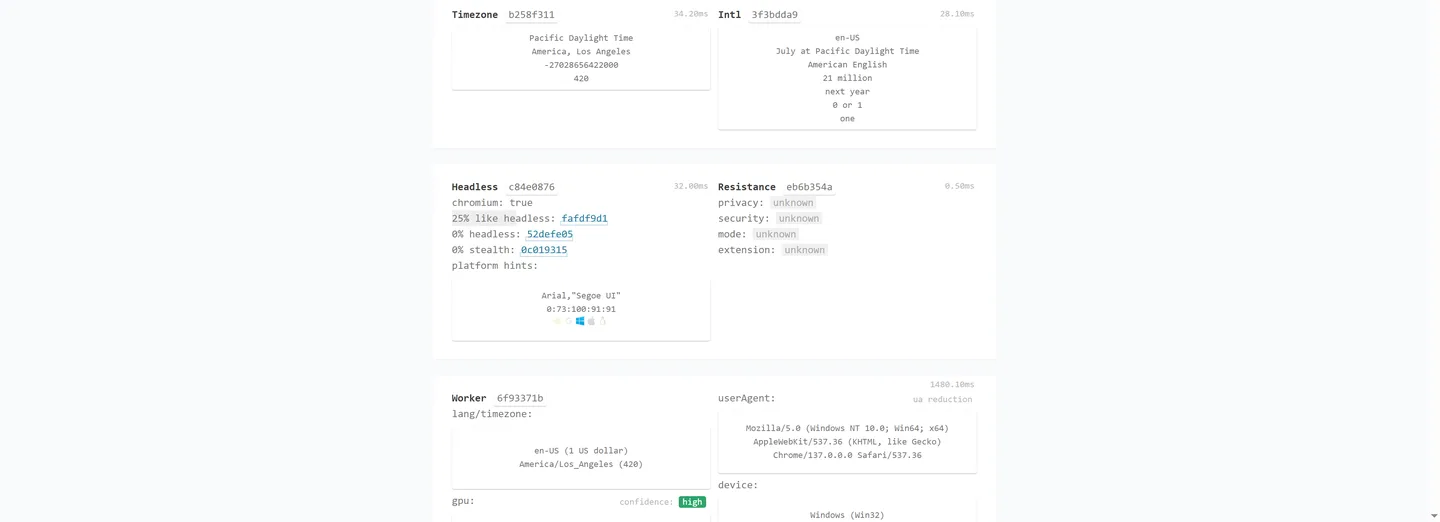
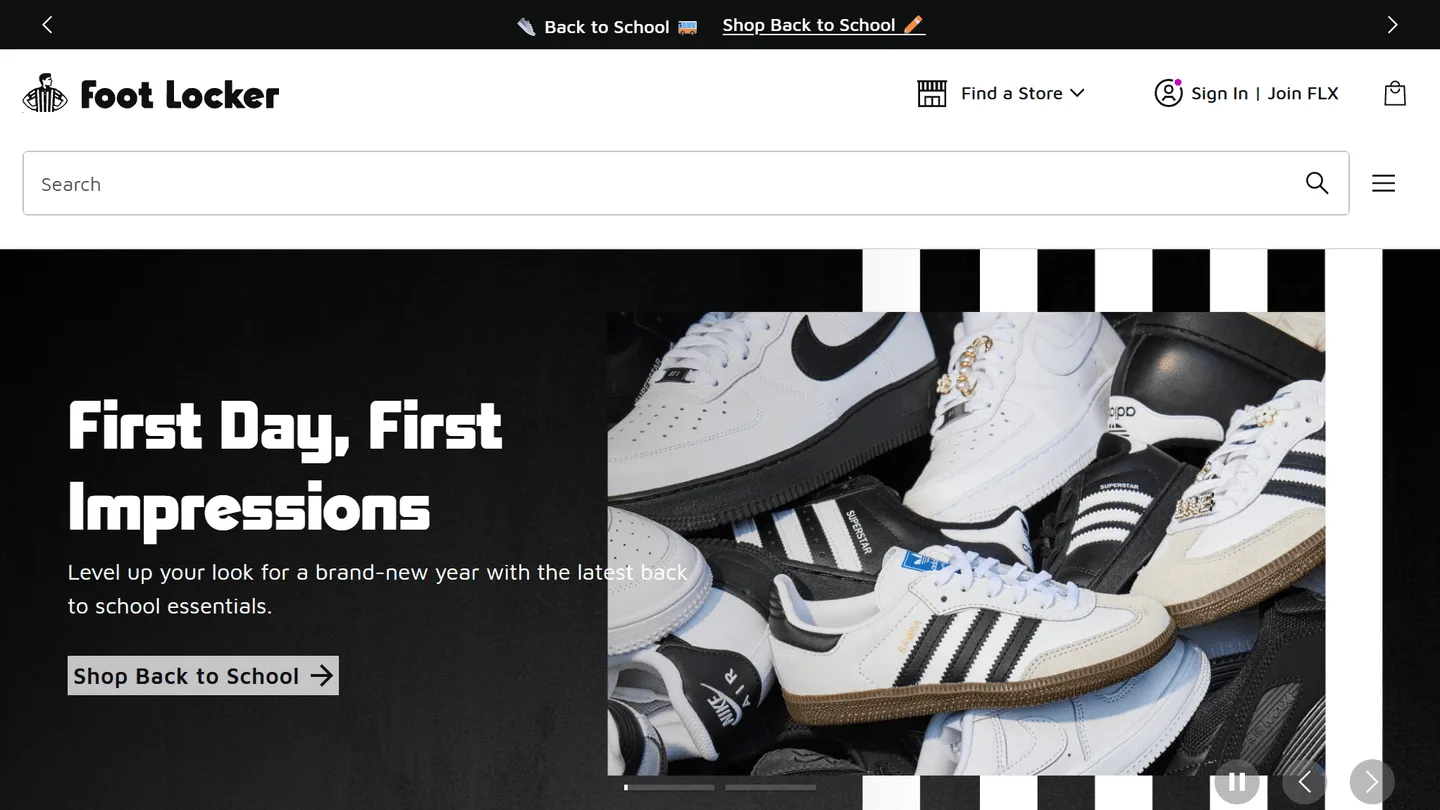
Verified by launching a real profile through a residential proxy, then opening the checks anyone can run — the public fingerprint detectors Whoer.net and CreepJS, plus live enterprise anti-bot walls from DataDome and Kasada. Live capture, not mockups.
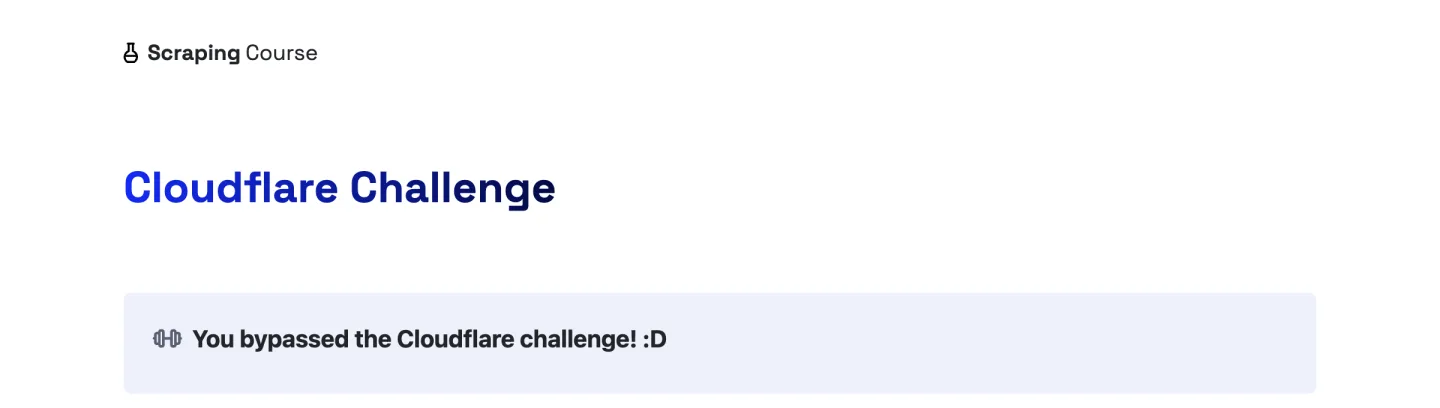
webdriver=false, timezone & locale aligned to the proxy.
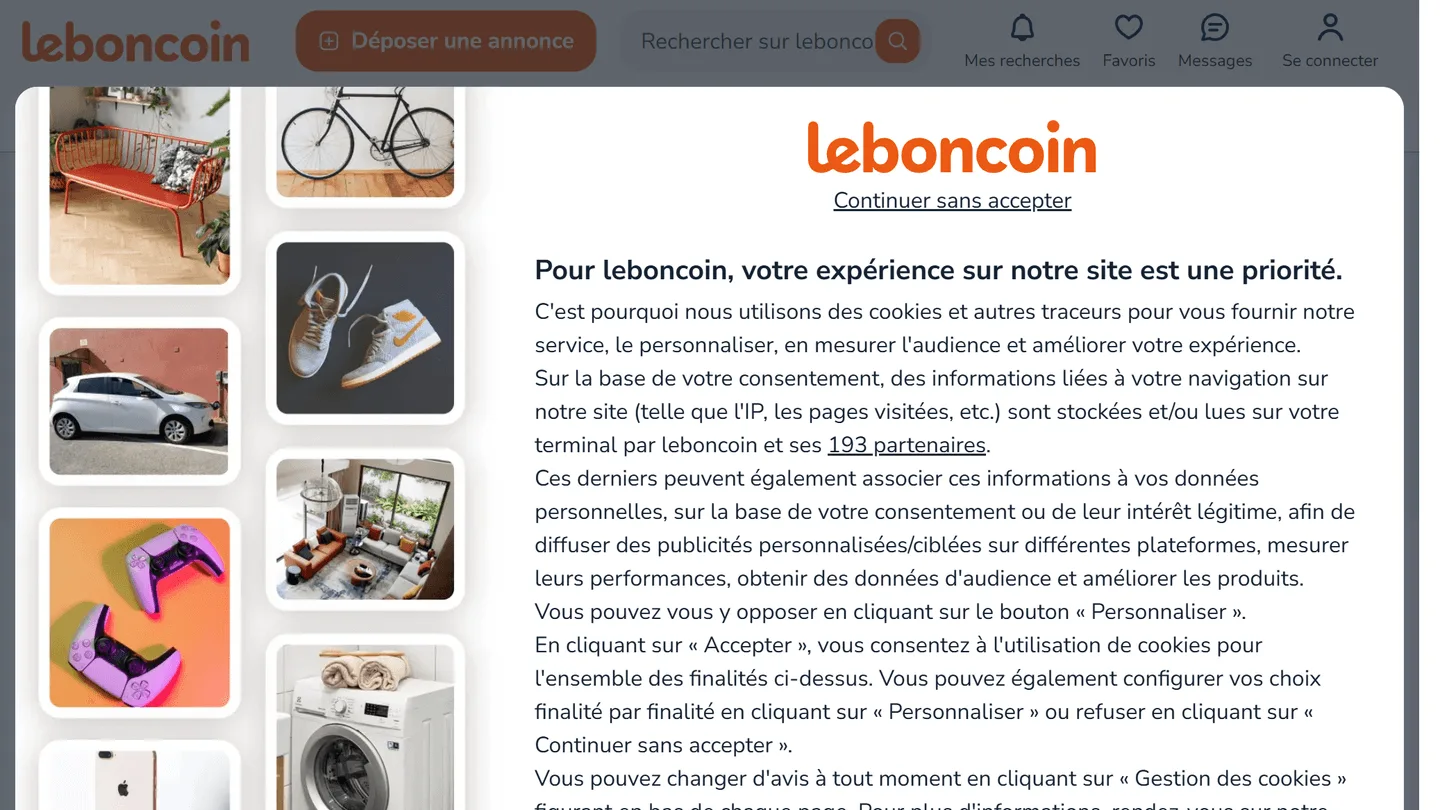
x-datadome: protected) served its real listings; no CAPTCHA wall, no captcha-delivery redirect.
x-kpsdk-*) threw its 429 proof-of-work challenge; the profile solved it in-browser and the real storefront rendered.Live verification run — exact scores vary with proxy and fingerprint. The point is consistency: every layer tells the same story.
Pick a target OS and locale. We assign a coherent, real-device fingerprint — every signal aligned, nothing to give it away.
Open it in the desktop app, or grab a Playwright handle in code. Same fingerprint, same session, either way.
Run dozens of isolated identities side by side. Sessions persist, labels keep you oriented, agents take the wheel.
A no-code cockpit to create, label, launch and watch every profile. No terminal required — and the Playwright API is one click away when you want it.
Each window shows its profile's colour, name and label right in the address bar.
Duplicate a configured profile, or roll a fresh self-consistent fingerprint in a click.
Bind a managed or custom HTTP/SOCKS5 proxy — timezone, locale and geo follow the exit IP.
Launch from the app, or drive the identical profile from the SDK and AI agents.
// Launch a real-device profile, get Playwright back import { AntiDetectBrowser } from "anti-detect-browser" const ab = new AntiDetectBrowser({ key: "your-api-key" }) const { browser, page } = await ab.launch({ profile: "ads-us-east", fingerprint: { tags: ["Windows 10", "Chrome"] }, proxyId: "us-east-01", }) await page.goto("https://example.com") // → standard Playwright Browser + Page
// Drop into any MCP client — Claude included { "mcpServers": { "anti-detect-browser": { "command": "npx", "args": ["anti-detect-browser", "--mcp"], "env": { "ANTI_DETECT_BROWSER_KEY": "your-api-key" } } } } // → agent gets launch, navigate, click, screenshot tools
Hand any AI agent a fully fingerprinted browser over MCP, or wire it up with the standard Playwright API you already write — no proprietary SDK to learn.
browser and page behave exactly as you expect.Unlimited local profiles, free forever. Paid plans add concurrency and cloud sync — priced lower than anyone in the category, not per seat.
Each fingerprint is sampled as a coherent Windows device profile — actual WebGL renderers, canvas hashes, audio stacks and font lists. Nothing is randomly generated, so signals never contradict each other.
No. launch() returns standard Playwright Browser and Page instances. Existing scripts work out of the box — only the launch line changes.
Run npx anti-detect-browser --mcp and the SDK exposes launch, navigate, click, type, read and screenshot tools. Drop it into Claude or any MCP client and your agent operates a fully fingerprinted browser.
Yes. Cookies, localStorage, IndexedDB and session state are stored per profile, so logged-in accounts stay warm across restarts.
Yes. Every profile gets its own virtual authenticator, so passkeys enrolled on a site are captured automatically and replayed on later logins — passwordless sign-ins persist per identity across restarts, just like cookies. Passkey capture & replay is on by default when you create a profile, and can be turned off per profile.
Windows and Linux are supported today; macOS is coming soon. The desktop app, the automation SDK and the MCP server all run on Windows and Linux (Node 18+).
Yes — unlimited local profiles with the full fingerprint kernel, no credit card required. Paid plans start at $9.9/mo and add concurrency and cloud sync, lower than anyone in the category.
Real-device fingerprints, driven by the Playwright you already write.